Trader’s Notebook: S&P 500

3:30 p.m. New York time

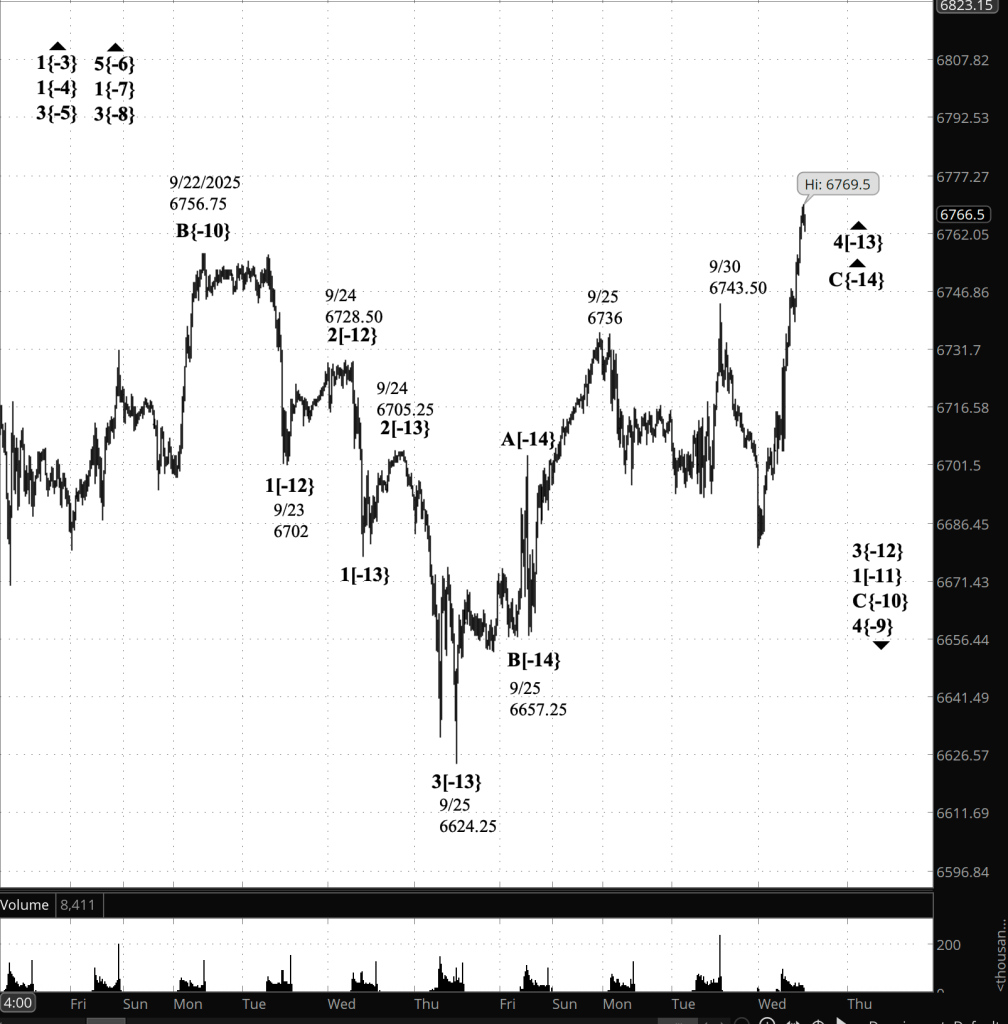
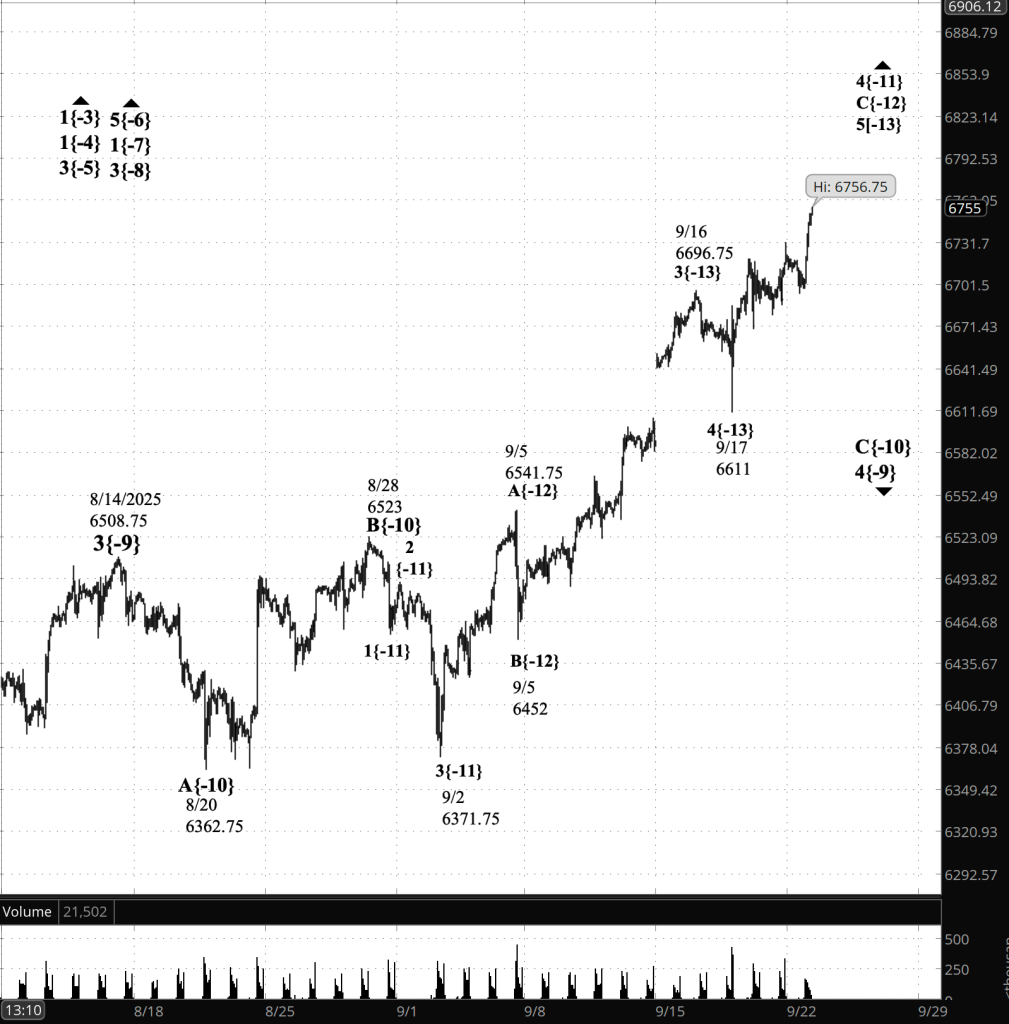
Half an hour before the closing bell. The S&P 500 futures fell during the session, reaching into the 6370s, slightly higher than yesterday’s low.

Elliott Wave Theory: The alternatives listed in this morning’s analysis remain unresolved: Wave 4 continues its decline and may be continuing wave A, it’s initial subwave, or may have begun wave B, its middle of three subwaves.

Big event: Fed Chair Jerome Powell addresses the Federal Reserve conference at Jackson Hole, Wyoming at 10 a.m. New York time on Friday. Alternatives: The speech will change the Federal Open Market Committee’s strategic goals for managing the dollar, which have been in place since 2012, giving us all a new world to navigate in, or the speech will leave everything as is, giving us a world that works just as it has been for more than a decade.

An interesting day for traders.

9:35 a.m. New York time.

What’s happening now. The S&P 500 E-mini futures fell from the 6410s to the 6380s overnight, remaining above the low point so far, 6362.75 on August 20, in the decline that began on August 14 from 6508.75.

What does it mean? Elliott Wave Theory analysis sees the decline as abeing a 4th-wave downward correction. Wave 4 would appear to be in its initial subwave, falling wave A, or perhaps in its second subwave, rising wave B. There’s a lack of clarity so far.

[S&P 500 E-mini futures at 3:30 p.m., 40-minute bars, with volume] 

Waves Now Underway

These are the waves currently in progress under my principal analysis. Each line on the list shows the wave number, with the subscript in curly brackets, the traditional degree name, the starting date, the starting price of the S&P 500 E-mini futures, and the direction of the wave.

  • S&P 500 Index:
  • 5{+3} Supercycle, 7/8/1932, 4.40 (up)
  • 5{+2} Cycle, 12/9/1974, 60.96 (up)
  • 5{+1} Primary, 3/6/2009, 666.79 (up)
  • 5{0} Intermediate, 2/11/2016, 1810.10 (up)
  • 3{-1} Minor, 3/23/2020, 2191.36 (up)
  • 1{-2} Minute, 7/31/2025, 6468.50 (down)
  • S&P 500 Futures
  • 1{-3} Minuette, 10/13/2022, 4603 (up)
  • 1{-4} Subminuette, 4/7/2025, 4832 (up)
  • 3{-5} Micro, 4/21/2025, 5127.25 (up)
  • 5{-6} Submicro, 8/1/2025, 6249.50 (up)
  • 1{-7} Minuscule, 8/1/2025, 6349.50 (up)
  • 3{-8} (unnamed), 8/5/2025, 6313.25 (up)
  • 4{-9} (unnamed), 8/14/2025, 6508.75

Reading the chart. Price movements — waves – – in Elliott Wave Theory analysis are labeled with numbers within trending waves and letters with corrective waves. The subscripts — numbers in curly brackets — designate the wave’s degree, which, in Elliott Wave analysis, means the relative position of a wave within the larger and smaller structures that make up the chart. R.N. Elliott, who in the 1930s developed the form of analysis that bears his name, viewed the chart as a complex structure of smaller waves nested within larger waves, which in turn are nested within still larger waves. In mathematics it’s called a fractal structure, where at every scale the pattern is similar to the others.

Learning and other resources. Elliott Wave analysis provides context, not prophecy. As the 20th century semanticist Alfred Korzybski put it in his book Science and Sanity (1933), “The map is not the territory … The only usefulness of a map depends on similarity of structure between the empirical world and the map.” And I would add, in the ever-changing markets, we can judge that similarity of structure only after the fact.

See the menu page Analytical Methods for a rundown on where to go for information on Elliott Wave analysis.

By Tim Bovee, Portland, Oregon, August 21, 2025

Disclaimer

Tim Bovee, Private Trader tracks the analysis and trades of a private trader for his own accounts. Nothing in this blog constitutes a recommendation to buy or sell stocks, options or any other financial instrument. The only purpose of this blog is to provide education and entertainment.

No trader is ever 100 percent successful in his or her trades. Trading in the stock and option markets is risky and uncertain. Each trader must make trading decisions for his or her own account, and take responsibility for the consequences.

All content on Tim Bovee, Private Trader by Timothy K. Bovee is licensed under a Creative Commons Attribution-ShareAlike 4.0 International License.

License

Based on a work at www.timbovee.com

Trader’s Notebook: S&P 500

3:30 p.m. New York time

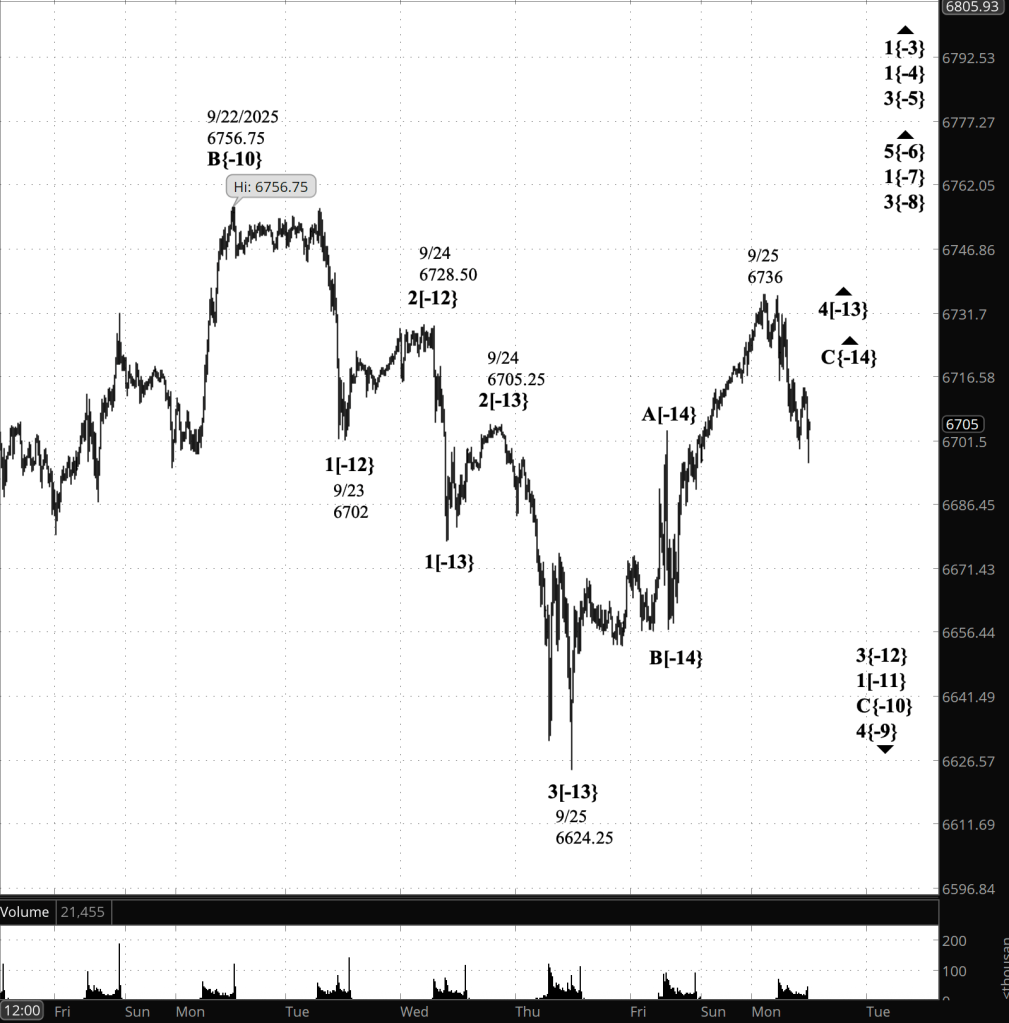
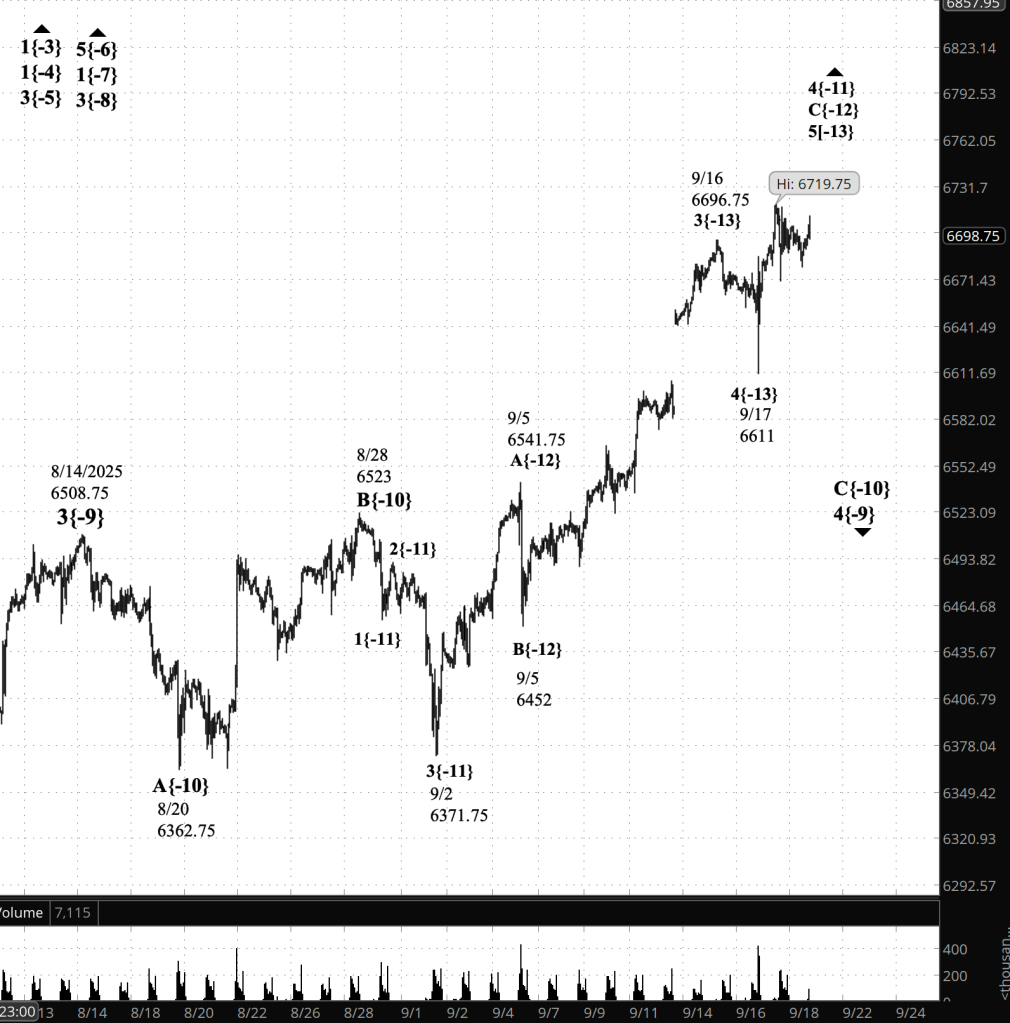
Half an hour before the closing bell. The S&P 500 futures reached a low early on of 6362.75, and then worked its way slightly higher, into the 6410s.

Elliott Wave Theory: The idea behind Elliott Wave Theory is that it represents the group mood, and understanding, and fear and optimism of the traders and the people who surround the traders — which is to say everyone — at a given moment in time.

Elliott Wave Theory at this moment in says the mood etc. is somewhat negative, worried that the price has moved too high among many other subjects. It’s a concern that has been with people since August 14. That’s the meaning of the 4th-wave downward correction that began on that date.

Arguably, from the past few days through 10 a.m. New York time on Friday, the mood will focus on Fed Chair Powell and his speech at the Jackson Hole, Wyoming meeting of the Federal Reserve. It is a fear-making time for people who are concerned about how the Federal Reserve is governed and what it means for the value of our currency, and so yes, Elliott Wave Theory has numbers and rules and a certain sense of inevitability. And yet, above all, it’s the product of people. Look at a stock chart, and you can know, instantly, what their mood is. And we’ll get a super dose of mood and response come Friday.

9:35 a.m. New York time.

What’s happening now. The S&P 500 E-mini futures continued a gentle fall overnight, reaching a low of 6408.

What does it mean? Elliott Wave Theory analysis concludes that the 4th-wave downward correction that began on August 14 continues. Within wave 4, things are less clear. It seems to be that wave 4 is still in its initial subwave, wave A, but I would have difficulty mapping the internals. It’s almost as through the futures were awaiting, with a bearish tilt, Friday’s speech by Fed Chair Powell at Friday’s Jackson Hole, Wyoming meeting of the Federal Reserve leadership. Powell is scheduled to speak at 10 a.m. Eastern time. The title of his speech: “Economic Outlook and Framework Review”.

[S&P 500 E-mini futures at 3:30 p.m., 35-minute bars, with volume] 

Waves Now Underway

These are the waves currently in progress under my principal analysis. Each line on the list shows the wave number, with the subscript in curly brackets, the traditional degree name, the starting date, the starting price of the S&P 500 E-mini futures, and the direction of the wave.

  • S&P 500 Index:
  • 5{+3} Supercycle, 7/8/1932, 4.40 (up)
  • 5{+2} Cycle, 12/9/1974, 60.96 (up)
  • 5{+1} Primary, 3/6/2009, 666.79 (up)
  • 5{0} Intermediate, 2/11/2016, 1810.10 (up)
  • 3{-1} Minor, 3/23/2020, 2191.36 (up)
  • 1{-2} Minute, 7/31/2025, 6468.50 (down)
  • S&P 500 Futures
  • 1{-3} Minuette, 10/13/2022, 4603 (up)
  • 1{-4} Subminuette, 4/7/2025, 4832 (up)
  • 3{-5} Micro, 4/21/2025, 5127.25 (up)
  • 5{-6} Submicro, 8/1/2025, 6249.50 (up)
  • 1{-7} Minuscule, 8/1/2025, 6349.50 (up)
  • 3{-8} (unnamed), 8/5/2025, 6313.25 (up)
  • 4{-9} (unnamed), 8/14/2025, 6508.75

Reading the chart. Price movements — waves – – in Elliott Wave Theory analysis are labeled with numbers within trending waves and letters with corrective waves. The subscripts — numbers in curly brackets — designate the wave’s degree, which, in Elliott Wave analysis, means the relative position of a wave within the larger and smaller structures that make up the chart. R.N. Elliott, who in the 1930s developed the form of analysis that bears his name, viewed the chart as a complex structure of smaller waves nested within larger waves, which in turn are nested within still larger waves. In mathematics it’s called a fractal structure, where at every scale the pattern is similar to the others.

Learning and other resources. Elliott Wave analysis provides context, not prophecy. As the 20th century semanticist Alfred Korzybski put it in his book Science and Sanity (1933), “The map is not the territory … The only usefulness of a map depends on similarity of structure between the empirical world and the map.” And I would add, in the ever-changing markets, we can judge that similarity of structure only after the fact.

See the menu page Analytical Methods for a rundown on where to go for information on Elliott Wave analysis.

By Tim Bovee, Portland, Oregon, August 20, 2025

Disclaimer

Tim Bovee, Private Trader tracks the analysis and trades of a private trader for his own accounts. Nothing in this blog constitutes a recommendation to buy or sell stocks, options or any other financial instrument. The only purpose of this blog is to provide education and entertainment.

No trader is ever 100 percent successful in his or her trades. Trading in the stock and option markets is risky and uncertain. Each trader must make trading decisions for his or her own account, and take responsibility for the consequences.

All content on Tim Bovee, Private Trader by Timothy K. Bovee is licensed under a Creative Commons Attribution-ShareAlike 4.0 International License.

License

Based on a work at www.timbovee.com

Trader’s Notebook: S&P 500

3:30 p.m. New York time

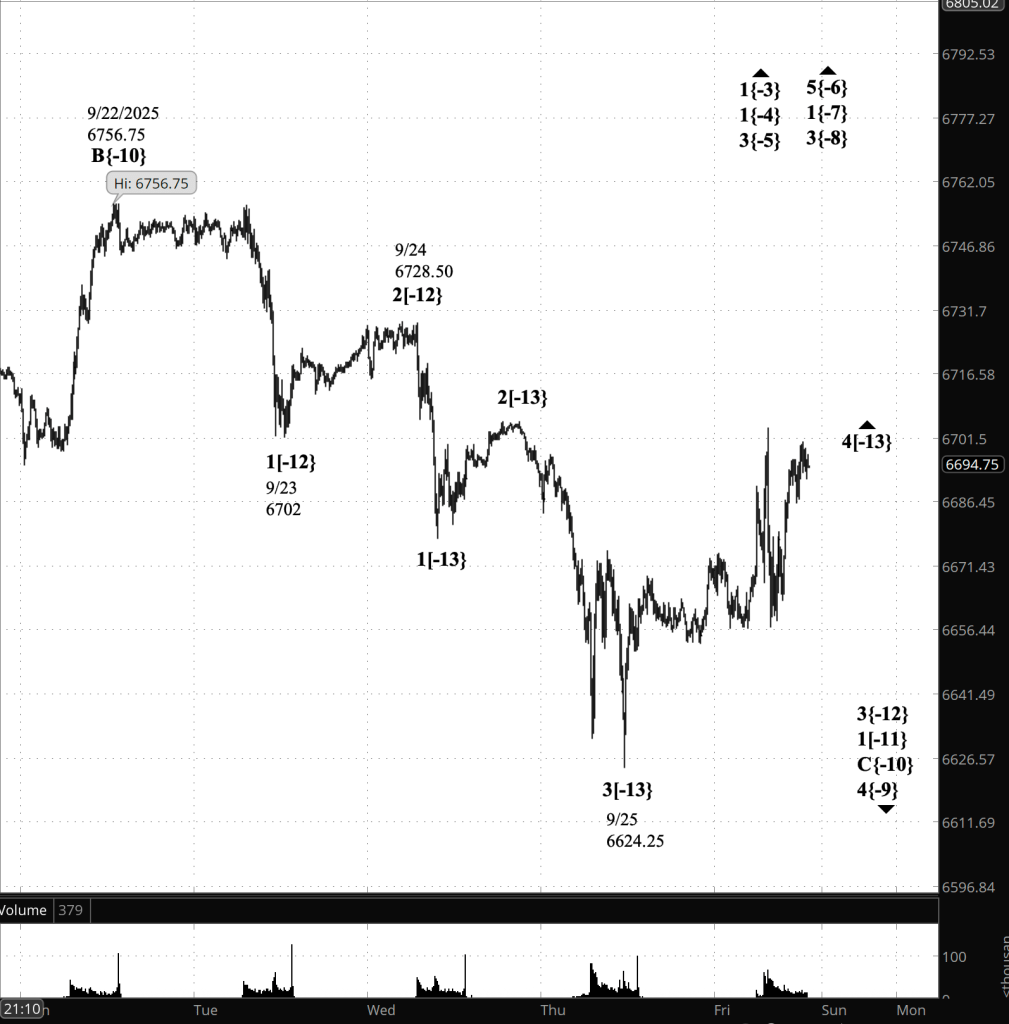
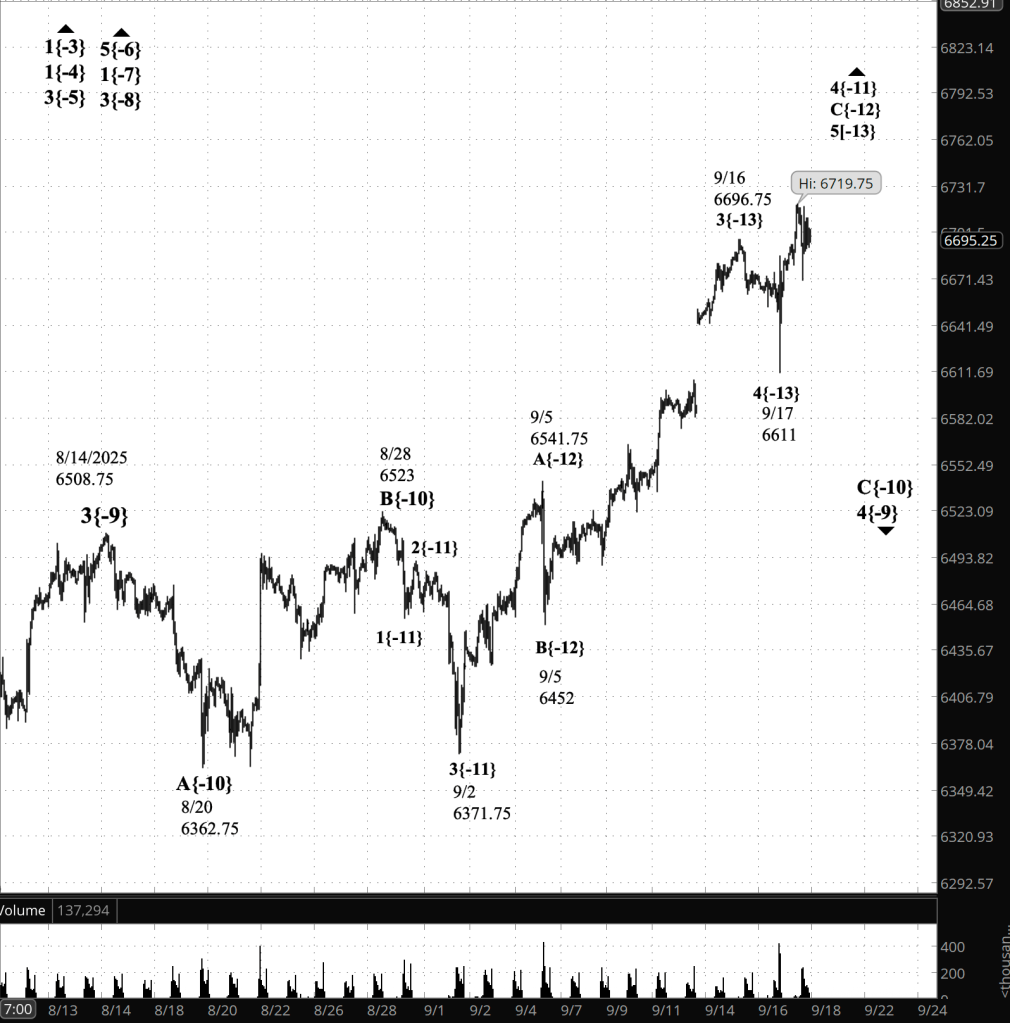
Half an hour before the closing bell. The S&P 500 futures fell further during the session, reaching into the 6410s. Elliot Wave Theory: The 4th-wave downward correction that began on August 14 continues.

9:35 a.m. New York time.

What’s happening now. S&P 500 E-mini futures continued to work its way lower overnight, reacing a low of 6454.

What does it mean? Elliott Wave Theory: The declining 4th-wave correction that began on August 14 continues, in a pattern that to my eyes more closely resembles subwaves within an A wave, the first portion of a three-wave correction. There are ambiguities, however, as discussed in yesterday’s analysis.

[S&P 500 E-mini futures at 3:30 p.m., 30-minute bars, with volume] 

Waves Now Underway

These are the waves currently in progress under my principal analysis. Each line on the list shows the wave number, with the subscript in curly brackets, the traditional degree name, the starting date, the starting price of the S&P 500 E-mini futures, and the direction of the wave.

  • S&P 500 Index:
  • 5{+3} Supercycle, 7/8/1932, 4.40 (up)
  • 5{+2} Cycle, 12/9/1974, 60.96 (up)
  • 5{+1} Primary, 3/6/2009, 666.79 (up)
  • 5{0} Intermediate, 2/11/2016, 1810.10 (up)
  • 3{-1} Minor, 3/23/2020, 2191.36 (up)
  • 1{-2} Minute, 7/31/2025, 6468.50 (down)
  • S&P 500 Futures
  • 1{-3} Minuette, 10/13/2022, 4603 (up)
  • 1{-4} Subminuette, 4/7/2025, 4832 (up)
  • 3{-5} Micro, 4/21/2025, 5127.25 (up)
  • 5{-6} Submicro, 8/1/2025, 6249.50 (up)
  • 1{-7} Minuscule, 8/1/2025, 6349.50 (up)
  • 3{-8} (unnamed), 8/5/2025, 6313.25 (up)
  • 4{-9} (unnamed), 8/14/2025, 6508.75

Reading the chart. Price movements — waves – – in Elliott Wave Theory analysis are labeled with numbers within trending waves and letters with corrective waves. The subscripts — numbers in curly brackets — designate the wave’s degree, which, in Elliott Wave analysis, means the relative position of a wave within the larger and smaller structures that make up the chart. R.N. Elliott, who in the 1930s developed the form of analysis that bears his name, viewed the chart as a complex structure of smaller waves nested within larger waves, which in turn are nested within still larger waves. In mathematics it’s called a fractal structure, where at every scale the pattern is similar to the others.

Learning and other resources. Elliott Wave analysis provides context, not prophecy. As the 20th century semanticist Alfred Korzybski put it in his book Science and Sanity (1933), “The map is not the territory … The only usefulness of a map depends on similarity of structure between the empirical world and the map.” And I would add, in the ever-changing markets, we can judge that similarity of structure only after the fact.

See the menu page Analytical Methods for a rundown on where to go for information on Elliott Wave analysis.

By Tim Bovee, Portland, Oregon, August 19, 2025

Disclaimer

Tim Bovee, Private Trader tracks the analysis and trades of a private trader for his own accounts. Nothing in this blog constitutes a recommendation to buy or sell stocks, options or any other financial instrument. The only purpose of this blog is to provide education and entertainment.

No trader is ever 100 percent successful in his or her trades. Trading in the stock and option markets is risky and uncertain. Each trader must make trading decisions for his or her own account, and take responsibility for the consequences.

All content on Tim Bovee, Private Trader by Timothy K. Bovee is licensed under a Creative Commons Attribution-ShareAlike 4.0 International License.

License

Based on a work at www.timbovee.com

Trader’s Notebook: S&P 500

3:30 p.m. New York time

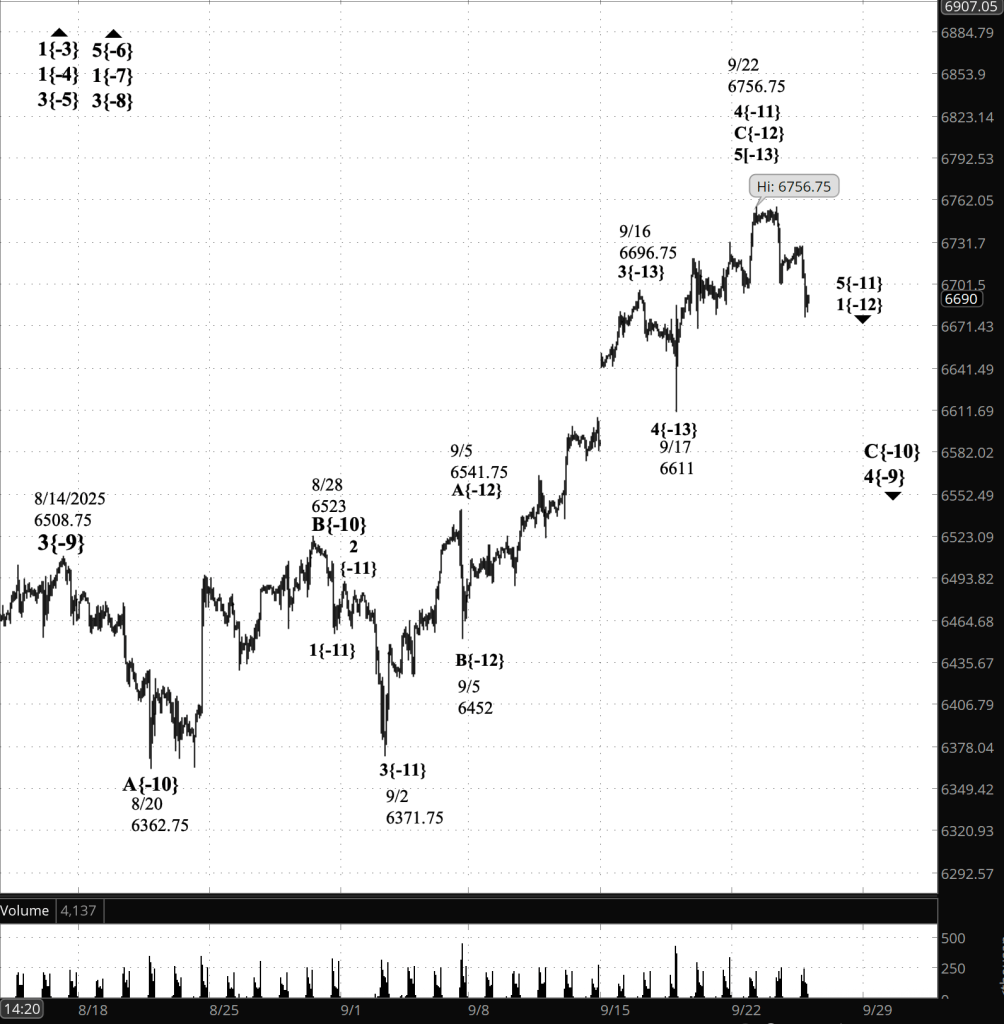
Half an hour before the closing bell. The S&P 500 futures fluctuated sideways during the session, bouncing between the 6450s and the 6470s.

Elliott Wave Theory: This morning’s analysis discussed a lack of clarity: Was wave A underway or wave C?. The present rise in a choppy fashion suggests that it was wave A. So the new choice: Is the choppiness a subwave of wave A, such as a 4th-wave correction, or has wave A ended and wave B, still choppy, begun? A puzzle to be studied overnight and tomorrow.

9:35 a.m. New York time.

What’s happening now. S&P 500 E-mini futures fell into the 6450s in a lackadaisical start tot he week.

What does it mean? Elliott Wave Theory sees the decline as being a 4th-wave downward correction that began last week, on August 14. It is a subwave of a rising 3rd wave that began on August 7, which in turn is a rising 1st wave within an uptrendng 5th wave that began on August 1.

The smallest of the waves listed, the 4th, appears to be in its 3rd subwave, the C wave, although it may well be the 3rd wave of the A wave, with two more subwaves lying ahead.

If its wave C, then a 4th wave correction is almost complete. If its wave A, there is more correction, risng waves B and falling wave C, that lie ahead.

Wave 4 will be followed by an uptrendng 5th wave, and how high wave 5 will go depends, roughly, on how low wave 4 has gone when it is complete.

Whichever scenario wave 4 follows,, wave 5 will likely end in the upper 6500s or the lower 6600s, based on Fibonacci resistance.

[S&P 500 E-mini futures at 3:30 p.m., 30-minute bars, with volume] 

Waves Now Underway

These are the waves currently in progress under my principal analysis. Each line on the list shows the wave number, with the subscript in curly brackets, the traditional degree name, the starting date, the starting price of the S&P 500 E-mini futures, and the direction of the wave.

  • S&P 500 Index:
  • 5{+3} Supercycle, 7/8/1932, 4.40 (up)
  • 5{+2} Cycle, 12/9/1974, 60.96 (up)
  • 5{+1} Primary, 3/6/2009, 666.79 (up)
  • 5{0} Intermediate, 2/11/2016, 1810.10 (up)
  • 3{-1} Minor, 3/23/2020, 2191.36 (up)
  • 1{-2} Minute, 7/31/2025, 6468.50 (down)
  • S&P 500 Futures
  • 1{-3} Minuette, 10/13/2022, 4603 (up)
  • 1{-4} Subminuette, 4/7/2025, 4832 (up)
  • 3{-5} Micro, 4/21/2025, 5127.25 (up)
  • 5{-6} Submicro, 8/1/2025, 6249.50 (up)
  • 1{-7} Minuscule, 8/1/2025, 6349.50 (up)
  • 3{-8} (unnamed), 8/5/2025, 6313.25 (up)
  • 4{-9} (unnamed), 8/14/2025, 6508.75

Reading the chart. Price movements — waves – – in Elliott Wave Theory analysis are labeled with numbers within trending waves and letters with corrective waves. The subscripts — numbers in curly brackets — designate the wave’s degree, which, in Elliott Wave analysis, means the relative position of a wave within the larger and smaller structures that make up the chart. R.N. Elliott, who in the 1930s developed the form of analysis that bears his name, viewed the chart as a complex structure of smaller waves nested within larger waves, which in turn are nested within still larger waves. In mathematics it’s called a fractal structure, where at every scale the pattern is similar to the others.

Learning and other resources. Elliott Wave analysis provides context, not prophecy. As the 20th century semanticist Alfred Korzybski put it in his book Science and Sanity (1933), “The map is not the territory … The only usefulness of a map depends on similarity of structure between the empirical world and the map.” And I would add, in the ever-changing markets, we can judge that similarity of structure only after the fact.

See the menu page Analytical Methods for a rundown on where to go for information on Elliott Wave analysis.

By Tim Bovee, Portland, Oregon, August 18, 2025

Disclaimer

Tim Bovee, Private Trader tracks the analysis and trades of a private trader for his own accounts. Nothing in this blog constitutes a recommendation to buy or sell stocks, options or any other financial instrument. The only purpose of this blog is to provide education and entertainment.

No trader is ever 100 percent successful in his or her trades. Trading in the stock and option markets is risky and uncertain. Each trader must make trading decisions for his or her own account, and take responsibility for the consequences.

All content on Tim Bovee, Private Trader by Timothy K. Bovee is licensed under a Creative Commons Attribution-ShareAlike 4.0 International License.

License

Based on a work at www.timbovee.com

Trader’s Notebook: S&P 500

3:30 p.m. New York time

Half an hour before the closing bell. The S&P 500 futures declined throughout the day from Thursday’s peak, 6308.75.

Elliott Wave Theory: The peak appears to be the end of a rising 3rd wave that began on August 5 from 6313.25, and the beginning of a 4th-wave downtrend.

The fall is not yet very deep, and that produces a lack of strong confidence in the analysis. The price could reverse today in the half hour remaining before the end of the session, or it could do so on Monday. Whenever, a swift reversal would suggest that my theory is wrong and wave 3 is still underway.

If instead the price continues to fall, then my theory was correct and wave 4 is underway.

Time will tell.

The waves in play appear as wave 3{-9} and wave 4{-9} within rising wave 3{-8}, a subwave of rising wave 1{-7}.

9:35 a.m. New York time.

What’s happening now. S&P 500 E-mini futures reached a high of 6508.75 overnight.

What does it mean? I’ve moved the chart into a closer view in order to see the details of the present rise, which began on August 1. Elliott Wave Theory sees that rise as the 1st subwave within a 5th wave. For clarity, I’ll describe the waves using the chart’s method: A wave number followed by a subscript in curly brackets noting the degree’s distance from Intermediate degree (presently wave 5{-0}, which began in February 2016).

Wave 1{-7} has been underway since August 1, as has its parent, wave 5{-6}. Internally, wave1{-7} is in its made subwave, wave 3{-8}, which in turn is in wave 3{-9}.

Wave 5{-6} is the final subwave within wave 3{-5}, which began on April 25, and which is a subwave of wave 1{-4}, one degree higher, which began on April 7.

Encompassing all is wave 1{-3}, which began on October 13, 2022.

[S&P 500 E-mini futures at 9:35 a.m., 4-hour bars, with volume] 

Waves Now Underway

These are the waves currently in progress under my principal analysis. Each line on the list shows the wave number, with the subscript in curly brackets, the traditional degree name, the starting date, the starting price of the S&P 500 E-mini futures, and the direction of the wave.

  • S&P 500 Index:
  • 5{+3} Supercycle, 7/8/1932, 4.40 (up)
  • 5{+2} Cycle, 12/9/1974, 60.96 (up)
  • 5{+1} Primary, 3/6/2009, 666.79 (up)
  • 5{0} Intermediate, 2/11/2016, 1810.10 (up)
  • 3{-1} Minor, 3/23/2020, 2191.36 (up)
  • 1{-2} Minute, 7/31/2025, 6468.50 (down)
  • S&P 500 Futures
  • 1{-3} Minuette, 10/13/2022, 4603 (up)
  • 1{-4} Subminuette, 4/7/2025, 4832 (up)
  • 3{-5} Micro, 4/21/2025, 5127.25 (up)
  • 5{-6} Submicro, 8/1/2025, 6249.50 (up)
  • 1{-7} Minuscule, 8/1/2025, 6349.50 (up)

Reading the chart. Price movements — waves – – in Elliott Wave Theory analysis are labeled with numbers within trending waves and letters with corrective waves. The subscripts — numbers in curly brackets — designate the wave’s degree, which, in Elliott Wave analysis, means the relative position of a wave within the larger and smaller structures that make up the chart. R.N. Elliott, who in the 1930s developed the form of analysis that bears his name, viewed the chart as a complex structure of smaller waves nested within larger waves, which in turn are nested within still larger waves. In mathematics it’s called a fractal structure, where at every scale the pattern is similar to the others.

Learning and other resources. Elliott Wave analysis provides context, not prophecy. As the 20th century semanticist Alfred Korzybski put it in his book Science and Sanity (1933), “The map is not the territory … The only usefulness of a map depends on similarity of structure between the empirical world and the map.” And I would add, in the ever-changing markets, we can judge that similarity of structure only after the fact.

See the menu page Analytical Methods for a rundown on where to go for information on Elliott Wave analysis.

By Tim Bovee, Portland, Oregon, August 15, 2025

Disclaimer

Tim Bovee, Private Trader tracks the analysis and trades of a private trader for his own accounts. Nothing in this blog constitutes a recommendation to buy or sell stocks, options or any other financial instrument. The only purpose of this blog is to provide education and entertainment.

No trader is ever 100 percent successful in his or her trades. Trading in the stock and option markets is risky and uncertain. Each trader must make trading decisions for his or her own account, and take responsibility for the consequences.

All content on Tim Bovee, Private Trader by Timothy K. Bovee is licensed under a Creative Commons Attribution-ShareAlike 4.0 International License.

License

Based on a work at www.timbovee.com

Trader’s Notebook: S&P 500

3:30 a.m. New York time

Half an hour before the losing bell. The S&P 500 futures barely budged during the session, remaining in the 6480s after peaking at 6502.50 the day before.

Elliott Wave Theory: The uptrending 3rd wave that began April 21 continues on its final subwave, wave 5. That 5th wave, in turn, appears to be in its 5h wave, although the wave divisions lack clarity at that degree.

9:35 a.m. New York time.

What’s happening now. Overnight, the S&P 500 E-mini futures remained slightly below the August 13 peak, 6502.50, until an hour before the opening bell, when it fell sharply down to the 6450s. The declne coincided with the releasse of two economic reports, the weekly Initial Jobless Claims, and the Producer Price Index.

What does it mean? Elliott Wave Theory sees the decline meaning little. It is a small step back within an uptrendng 5th-wave that began on August 1.

In terms of wave numnrs and their degrees relative to Intermediate degree, the overnight decline is a subwave within risng wve 3{-8} within risng wav 1{-7} within rising wave 5{-6}, the smallest of a 3-degree grouping.

Minuscule indeed.

[S&P 500 E-mini futures at 3:30 p.m., 4-hour bars, with volume] 

Waves Now Underway

These are the waves currently in progress under my principal analysis. Each line on the list shows the wave number, with the subscript in curly brackets, the traditional degree name, the starting date, the starting price of the S&P 500 E-mini futures, and the direction of the wave.

  • S&P 500 Index:
  • 5{+3} Supercycle, 7/8/1932, 4.40 (up)
  • 5{+2} Cycle, 12/9/1974, 60.96 (up)
  • 5{+1} Primary, 3/6/2009, 666.79 (up)
  • 5{0} Intermediate, 2/11/2016, 1810.10 (up)
  • 3{-1} Minor, 3/23/2020, 2191.36 (up)
  • 1{-2} Minute, 7/31/2025, 6468.50 (down)
  • S&P 500 Futures
  • 1{-3} Minuette, 10/13/2022, 4603 (up)
  • 1{-4} Subminuette, 4/7/2025, 4832 (up)
  • 3{-5} Micro, 4/21/2025, 5127.25 (up)
  • 5{-6} Submicro, 8/1/2025, 6349.50 (up)
  • 1{-7} Minuscule, 8/1/2025, 6349.50 (up)

Reading the chart. Price movements — waves – – in Elliott Wave Theory analysis are labeled with numbers within trending waves and letters with corrective waves. The subscripts — numbers in curly brackets — designate the wave’s degree, which, in Elliott Wave analysis, means the relative position of a wave within the larger and smaller structures that make up the chart. R.N. Elliott, who in the 1930s developed the form of analysis that bears his name, viewed the chart as a complex structure of smaller waves nested within larger waves, which in turn are nested within still larger waves. In mathematics it’s called a fractal structure, where at every scale the pattern is similar to the others.

Learning and other resources. Elliott Wave analysis provides context, not prophecy. As the 20th century semanticist Alfred Korzybski put it in his book Science and Sanity (1933), “The map is not the territory … The only usefulness of a map depends on similarity of structure between the empirical world and the map.” And I would add, in the ever-changing markets, we can judge that similarity of structure only after the fact.

See the menu page Analytical Methods for a rundown on where to go for information on Elliott Wave analysis.

By Tim Bovee, Portland, Oregon, August 14, 2025

Disclaimer

Tim Bovee, Private Trader tracks the analysis and trades of a private trader for his own accounts. Nothing in this blog constitutes a recommendation to buy or sell stocks, options or any other financial instrument. The only purpose of this blog is to provide education and entertainment.

No trader is ever 100 percent successful in his or her trades. Trading in the stock and option markets is risky and uncertain. Each trader must make trading decisions for his or her own account, and take responsibility for the consequences.

All content on Tim Bovee, Private Trader by Timothy K. Bovee is licensed under a Creative Commons Attribution-ShareAlike 4.0 International License.

License

Based on a work at www.timbovee.com.

Trader’s Notebook: S&P 500

3:30 p.m. New York time

Half an hour before the closing bell. The S&P 500 futures continued to creep higher during the session, so far reaching above 3500. Elliott Wave Theory: The uptrending 5th wave that began on August 1 from 6349.50 continues.

9:35 a.m. New York time.

What’s happening now. The S&P 500 E-mini futures rose overnight reaching 6488.50.

What does it mean? The high exceeded the late July high, 6468.50, which had appeared to be the end of a major uptrend and the beginnng of a downtrend.

Elliott Wave Theory shows that such was not the case. EWT has a firm rule that a 2nd wave can’t move beyond the start of the preceding 1st wave. The new high did just that. When the map no longer matches the terrain, the map must be redrawn.

My redrawing the wave labels to bring them back into appiance with Elliott Wave Theory rules workes like this:

  • Waves 1{-3}, 5{-4] and 5{-5} have not yet ended but are still underway.
  • Wave 5{-6} is in its 5th wave, also underway
  • Wave 5{-6]’s initial subwave, wave 1{-7}, is also underway.

And with those changes, the map once again matchs the terrain. Let’s see where it takes us.

[S&P 500 E-mini futures at 3:30 p.m., 4-hour bars, with volume] 

Waves Now Underway

These are the waves currently in progress under my principal analysis. Each line on the list shows the wave number, with the subscript in curly brackets, the traditional degree name, the starting date, the starting price of the S&P 500 E-mini futures, and the direction of the wave.

  • S&P 500 Index:
  • 5{+3} Supercycle, 7/8/1932, 4.40 (up)
  • 5{+2} Cycle, 12/9/1974, 60.96 (up)
  • 5{+1} Primary, 3/6/2009, 666.79 (up)
  • 5{0} Intermediate, 2/11/2016, 1810.10 (up)
  • 3{-1} Minor, 3/23/2020, 2191.36 (up)
  • 1{-2} Minute, 7/31/2025, 6468.50 (down)
  • S&P 500 Futures
  • 1{-3} Minuette, 10/13/2022, 4603 (up)
  • 1{-4} Subminuette, 4/7/2025, 4832 (up)
  • 1{-5} Micro, 4/7/2025, 4832 (up)
  • 5{-6} Submicro, 8/1/2025, 6349.50 (up)
  • 1{-7} Minuscule, 8/1/2025, 6349.50 (up)

Reading the chart. Price movements — waves – – in Elliott Wave Theory analysis are labeled with numbers within trending waves and letters with corrective waves. The subscripts — numbers in curly brackets — designate the wave’s degree, which, in Elliott Wave analysis, means the relative position of a wave within the larger and smaller structures that make up the chart. R.N. Elliott, who in the 1930s developed the form of analysis that bears his name, viewed the chart as a complex structure of smaller waves nested within larger waves, which in turn are nested within still larger waves. In mathematics it’s called a fractal structure, where at every scale the pattern is similar to the others.

Learning and other resources. Elliott Wave analysis provides context, not prophecy. As the 20th century semanticist Alfred Korzybski put it in his book Science and Sanity (1933), “The map is not the territory … The only usefulness of a map depends on similarity of structure between the empirical world and the map.” And I would add, in the ever-changing markets, we can judge that similarity of structure only after the fact.

See the menu page Analytical Methods for a rundown on where to go for information on Elliott Wave analysis.

By Tim Bovee, Portland, Oregon, August 13, 2025

Disclaimer

Tim Bovee, Private Trader tracks the analysis and trades of a private trader for his own accounts. Nothing in this blog constitutes a recommendation to buy or sell stocks, options or any other financial instrument. The only purpose of this blog is to provide education and entertainment.

No trader is ever 100 percent successful in his or her trades. Trading in the stock and option markets is risky and uncertain. Each trader must make trading decisions for his or her own account, and take responsibility for the consequences.

All content on Tim Bovee, Private Trader by Timothy K. Bovee is licensed under a Creative Commons Attribution-ShareAlike 4.0 International License.

License

Based on a work at www.timbovee.com.

Trader’s Notebook: S&P 500

3:30 p.m. New York time

Half an hour before the closing bell. The S&P 500 futures continued to rise during he session, coming within 75 cents of a 100% Fibonacci retracement Elliott Wave Theory has a firm rule that a 2nd wave never moves beyond the start of the preceding 1st wave, at 3848.50. If it does, then it isn’t a 2nd wave that began on August 1. Something else is going on.

There are some hedges that possibly are legitimate way to avoid triggering the, The futures at hand are a derivative S&P 500 index. Moreover, it moves in 25-cent increments. So if the price moves one cent above the 100% retracement level, does that really count as indisputably above? Or is it a tiny rounding error?

Moreover, it’s possible, if I squint real hard, to see the declining 1st wave, the initial subwave of wave A, to actually be waves A, B and C, meaning that the 2nd wave downward correction ended on August 1, and wave 3 began from that point.

At this point, we don’t know for sure and are relying on 20-20 hindsight.

If it beaks above and continues to rise for some distance, then the downward correction ended on August 1 and an uptrending 1st wave may well be underway.

If the price briefly breaks a short distance — 12 cents or less, maybe? — above the start of the preceding 1st wave and then retreats, that lends credence wave B having just ended and wave C having begun, both within wave 2.

9:35 a.m. New York time.

What’s happening now. The S&P 500 E-mini futures traded sideways between the 6390s and the 6410s until an hour before the opening bell, when the release of the Consumer Price Index sent the price on a 7-minute rise into the 6440s. The CPI-U on average rose 0.2 each month, with a high of 0.5 in January and a low of -0.1 in March. When the session began the futures were trading in the 6420s.

What does it mean? In Elliott Wave Theory, the rise was the last leg of the 5th and final subwave within wave A, the first subwave of a 2nd-wave upward correction that began on August 1.

All of this is part of a downward correction two degrees larger that began on July 31 and which is working through its A wave.

When the smaller 2nd wave is complete, a downtrending 3rd wave will follow, then a 4th-wave upward correction and a downtrendng 5th-wave that wil complete the internal structure of the larger 2nd wave and mark the beginning of a rising 3rd wave of the same degree.

[S&P 500 E-mini futures at 3:30 p.m., 30-minute bars, with volume] 

Waves Now Underway

These are the waves currently in progress under my principal analysis. Each line on the list shows the wave number, with the subscript in curly brackets, the traditional degree name, the starting date, the starting price of the S&P 500 E-mini futures, and the direction of the wave.

  • S&P 500 Index:
  • 5{+3} Supercycle, 7/8/1932, 4.40 (up)
  • 5{+2} Cycle, 12/9/1974, 60.96 (up)
  • 5{+1} Primary, 3/6/2009, 666.79 (up)
  • 5{0} Intermediate, 2/11/2016, 1810.10 (up)
  • 3{-1} Minor, 3/23/2020, 2191.36 (up)
  • 1{-2} Minute, 7/31/2025, 6468.50 (down)
  • S&P 500 Futures
  • 2{-3} Minuette, 7/31/2025, 6468.50 (down)
  • A{-4} Subminuette, 7/31/2025, 6468.50 (down)
  • 2{-5} Micro, 8/1/2025, 6239.50 (up)
  • A{-6} Submicro, 8/1/2020, 6239.50 (up)
  • 5{-7} Submicro, 8/11/2025 6387.50 (up)

Reading the chart. Price movements — waves – – in Elliott Wave Theory analysis are labeled with numbers within trending waves and letters with corrective waves. The subscripts — numbers in curly brackets — designate the wave’s degree, which, in Elliott Wave analysis, means the relative position of a wave within the larger and smaller structures that make up the chart. R.N. Elliott, who in the 1930s developed the form of analysis that bears his name, viewed the chart as a complex structure of smaller waves nested within larger waves, which in turn are nested within still larger waves. In mathematics it’s called a fractal structure, where at every scale the pattern is similar to the others.

Learning and other resources. Elliott Wave analysis provides context, not prophecy. As the 20th century semanticist Alfred Korzybski put it in his book Science and Sanity (1933), “The map is not the territory … The only usefulness of a map depends on similarity of structure between the empirical world and the map.” And I would add, in the ever-changing markets, we can judge that similarity of structure only after the fact.

See the menu page Analytical Methods for a rundown on where to go for information on Elliott Wave analysis.

By Tim Bovee, Portland, Oregon, August 12, 2025

Disclaimer

Tim Bovee, Private Trader tracks the analysis and trades of a private trader for his own accounts. Nothing in this blog constitutes a recommendation to buy or sell stocks, options or any other financial instrument. The only purpose of this blog is to provide education and entertainment.

No trader is ever 100 percent successful in his or her trades. Trading in the stock and option markets is risky and uncertain. Each trader must make trading decisions for his or her own account, and take responsibility for the consequences.

All content on Tim Bovee, Private Trader by Timothy K. Bovee is licensed under a Creative Commons Attribution-ShareAlike 4.0 International License.

License

Based on a work at www.timbovee.com.

Trader’s Notebook: S&P 500

3:30 p.m. New York time

Half an hour before the closing bell. The S&P 500 futures inched slightly above the previous peak within the rising 2nd-wave correction that has been underway since August 1, and then swiftly retreated.

Elliott Wave Theory: The new high, on August 11 (today) appears to be the peak of subwave 3 within wave A of the wave 2 correction,although that’s not verified and so is not a certainty. If it the end of the 3rd, then the 4th subwave is now underway.

The 4th subwave, when complete, will be followed by a 5th subwave

9:35 a.m. New York time.

What’s happening now. The S&P 500 E-mini futures continued to bounce around the 6420s after trading resumed overnight

What does it mean? In Elliott Wave Theory, the level of the stall is significant: The 78.6% Fibonacci retracement level, 6419.49. The retracement now underway is an upward correction, wave 2, that began on August 1, in relation to the downtrending 1st wave that began on July 31.

Internally, wave 2 is a subwave of a larger wave A, which began on July 31, a subwave of a still larger 2nd-wave downward correction that began on that date.

The 2nd wave that began on August 1 appears to have completed its 3rd subwave — maybe — and to be beginning its 4th subwave. I suspect that Tuesday’s release of fresh inflation numbers will clarify the correct wave labels.

[S&P 500 E-mini futures at 3:30 p.m., 30-minute bars, with volume] 

Waves Now Underway

These are the waves currently in progress under my principal analysis. Each line on the list shows the wave number, with the subscript in curly brackets, the traditional degree name, the starting date, the starting price of the S&P 500 E-mini futures, and the direction of the wave.

  • S&P 500 Index:
  • 5{+3} Supercycle, 7/8/1932, 4.40 (up)
  • 5{+2} Cycle, 12/9/1974, 60.96 (up)
  • 5{+1} Primary, 3/6/2009, 666.79 (up)
  • 5{0} Intermediate, 2/11/2016, 1810.10 (up)
  • 3{-1} Minor, 3/23/2020, 2191.36 (up)
  • 1{-2} Minute, 7/31/2025, 6468.50 (down)
  • S&P 500 Futures
  • 2{-3} Minuette, 7/31/2025, 6468.50 (down)
  • A{-4} Subminuette, 7/31/2025, 6468.50 (down)
  • 2{-5} Micro, 8/1/2025, 6239.50 (up)
  • A{-6} Submicro, 8/1/2020, 6239.50 (up)
  • 3{-7} Submicro, 8/7/2025 6334.50 (up)

Reading the chart. Price movements — waves – – in Elliott Wave Theory analysis are labeled with numbers within trending waves and letters with corrective waves. The subscripts — numbers in curly brackets — designate the wave’s degree, which, in Elliott Wave analysis, means the relative position of a wave within the larger and smaller structures that make up the chart. R.N. Elliott, who in the 1930s developed the form of analysis that bears his name, viewed the chart as a complex structure of smaller waves nested within larger waves, which in turn are nested within still larger waves. In mathematics it’s called a fractal structure, where at every scale the pattern is similar to the others.

Learning and other resources. Elliott Wave analysis provides context, not prophecy. As the 20th century semanticist Alfred Korzybski put it in his book Science and Sanity (1933), “The map is not the territory … The only usefulness of a map depends on similarity of structure between the empirical world and the map.” And I would add, in the ever-changing markets, we can judge that similarity of structure only after the fact.

See the menu page Analytical Methods for a rundown on where to go for information on Elliott Wave analysis.

By Tim Bovee, Portland, Oregon, August 11, 2025

Disclaimer

Tim Bovee, Private Trader tracks the analysis and trades of a private trader for his own accounts. Nothing in this blog constitutes a recommendation to buy or sell stocks, options or any other financial instrument. The only purpose of this blog is to provide education and entertainment.

No trader is ever 100 percent successful in his or her trades. Trading in the stock and option markets is risky and uncertain. Each trader must make trading decisions for his or her own account, and take responsibility for the consequences.

All content on Tim Bovee, Private Trader by Timothy K. Bovee is licensed under a Creative Commons Attribution-ShareAlike 4.0 International License.

License

Based on a work at www.timbovee.com.

Trader’s Notebook: S&P 500

3:30 p.m. New York time

Half an hour before the closing bell. The S&P 500 futures rose during the session.

Elliott Wave Theory: The price returned to the 78.6% Fibonacci retracement level, as the low-degree 5th wave that began on August 8 from 6334.50. The wave paused around 6419, a bit less than $ below the 3d-wave endpoint.

When wave 5 reaches its end, it will also be the end of its parent, a 2nd-wave upward correction, and the beginning of a 3rd-wave downtrend. All of this is with a larger A-wave, the first subwave of a 2nd-wave downward correction, a major peak at 5468.50 on July 31.

9:35 a.m. New York time.

What’s happening now. The S&P 500 E-mini futures fluctuated from the 6330s to the 6380s overnight.

What does it mean? The range, accordng to Elliott Wave Theory, is around the 61.8% Fibonacci retracement level, as the 2nd=-wave upward correction that began on August 1 continues to work through its 4th subwave, one degree lower.

[S&P 500 E-mini futures at 3:30 p.m., 30-minute bars, with volume] 

Waves Now Underway

These are the waves currently in progress under my principal analysis. Each line on the list shows the wave number, with the subscript in curly brackets, the traditional degree name, the starting date, the starting price of the S&P 500 E-mini futures, and the direction of the wave.

  • S&P 500 Index:
  • 5{+3} Supercycle, 7/8/1932, 4.40 (up)
  • 5{+2} Cycle, 12/9/1974, 60.96 (up)
  • 5{+1} Primary, 3/6/2009, 666.79 (up)
  • 5{0} Intermediate, 2/11/2016, 1810.10 (up)
  • 3{-1} Minor, 3/23/2020, 2191.36 (up)
  • 1{-2} Minute, 7/31/2025, 6468.50 (down)
  • S&P 500 Futures
  • 2{-3} Minuette, 7/31/2025, 6468.50 (down)
  • A{-4} Subminuette, 7/31/2025, 6468.50 (down)
  • 2{-5} Micro, 8/1/2025, 6239.50 (up)
  • 5{-6} Submicro, 8/7/2025 6334.50 (up)

Reading the chart. Price movements — waves – – in Elliott Wave Theory analysis are labeled with numbers within trending waves and letters with corrective waves. The subscripts — numbers in curly brackets — designate the wave’s degree, which, in Elliott Wave analysis, means the relative position of a wave within the larger and smaller structures that make up the chart. R.N. Elliott, who in the 1930s developed the form of analysis that bears his name, viewed the chart as a complex structure of smaller waves nested within larger waves, which in turn are nested within still larger waves. In mathematics it’s called a fractal structure, where at every scale the pattern is similar to the others.

Learning and other resources. Elliott Wave analysis provides context, not prophecy. As the 20th century semanticist Alfred Korzybski put it in his book Science and Sanity (1933), “The map is not the territory … The only usefulness of a map depends on similarity of structure between the empirical world and the map.” And I would add, in the ever-changing markets, we can judge that similarity of structure only after the fact.

See the menu page Analytical Methods for a rundown on where to go for information on Elliott Wave analysis.

By Tim Bovee, Portland, Oregon, August 8, 2025

Disclaimer

Tim Bovee, Private Trader tracks the analysis and trades of a private trader for his own accounts. Nothing in this blog constitutes a recommendation to buy or sell stocks, options or any other financial instrument. The only purpose of this blog is to provide education and entertainment.

No trader is ever 100 percent successful in his or her trades. Trading in the stock and option markets is risky and uncertain. Each trader must make trading decisions for his or her own account, and take responsibility for the consequences.

All content on Tim Bovee, Private Trader by Timothy K. Bovee is licensed under a Creative Commons Attribution-ShareAlike 4.0 International License.

License

Based on a work at www.timbovee.com.