9:35 a.m. New York time
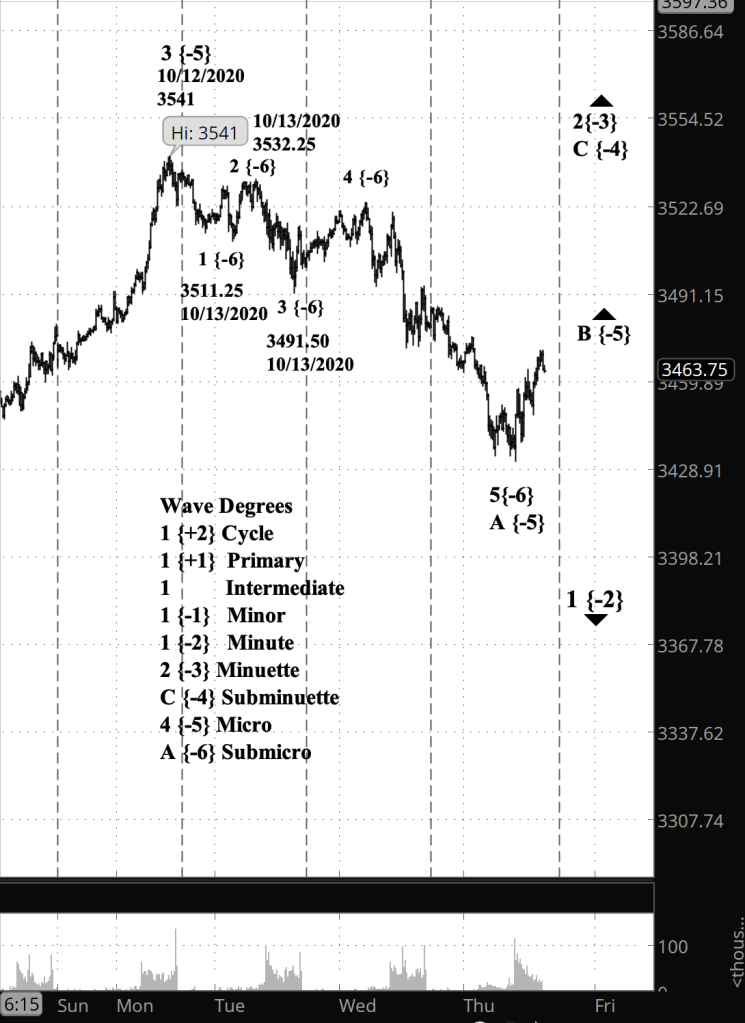
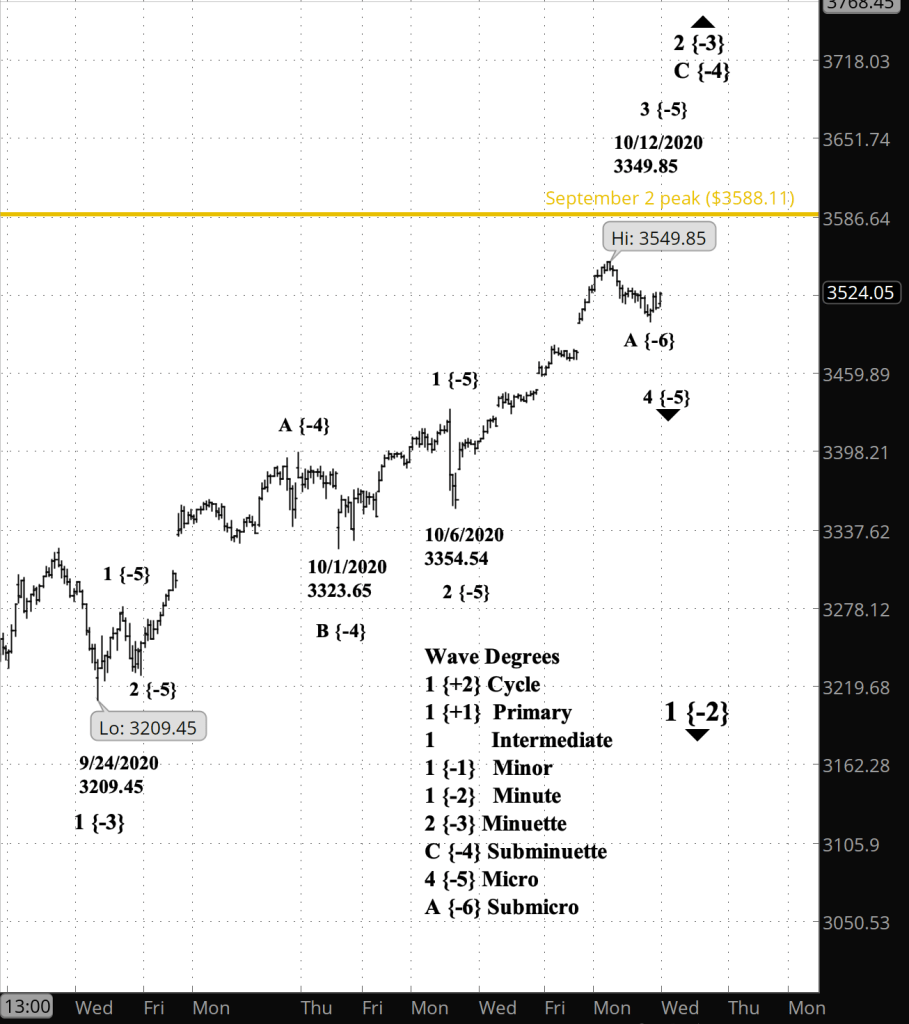
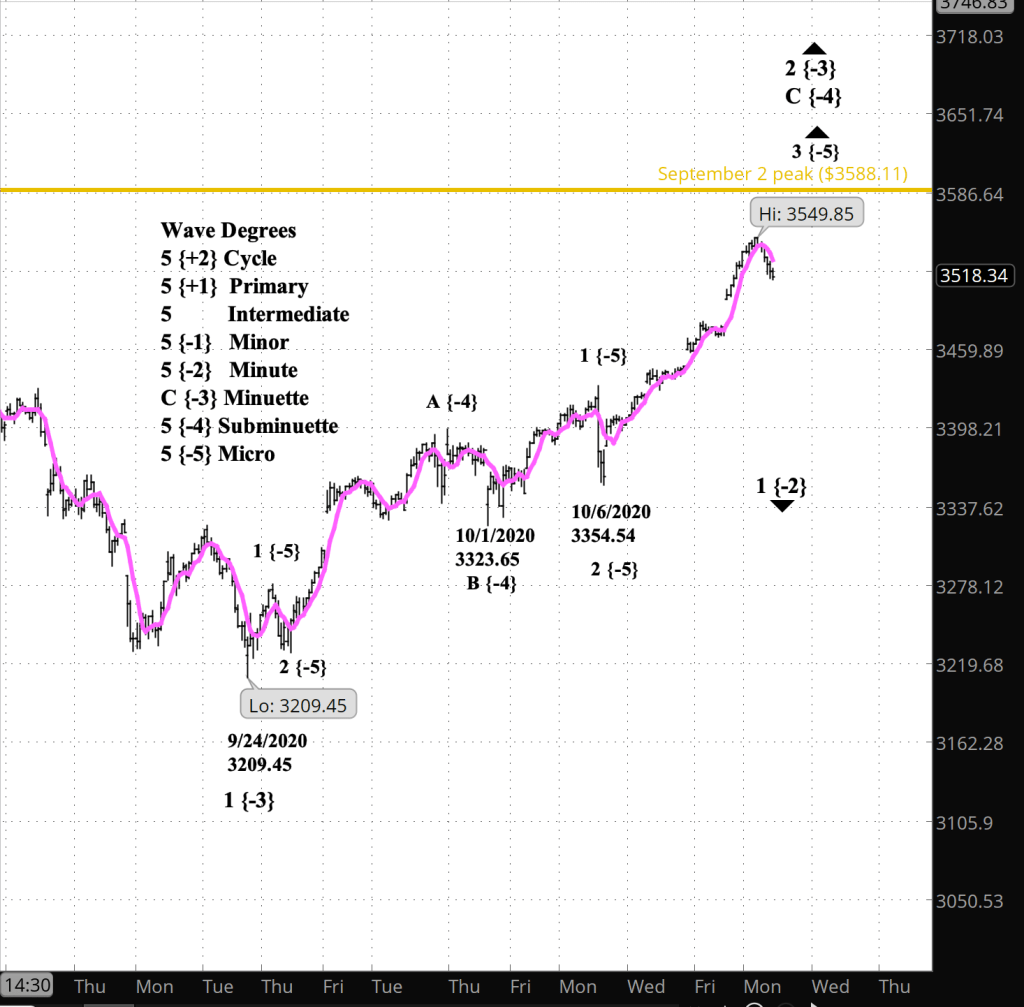
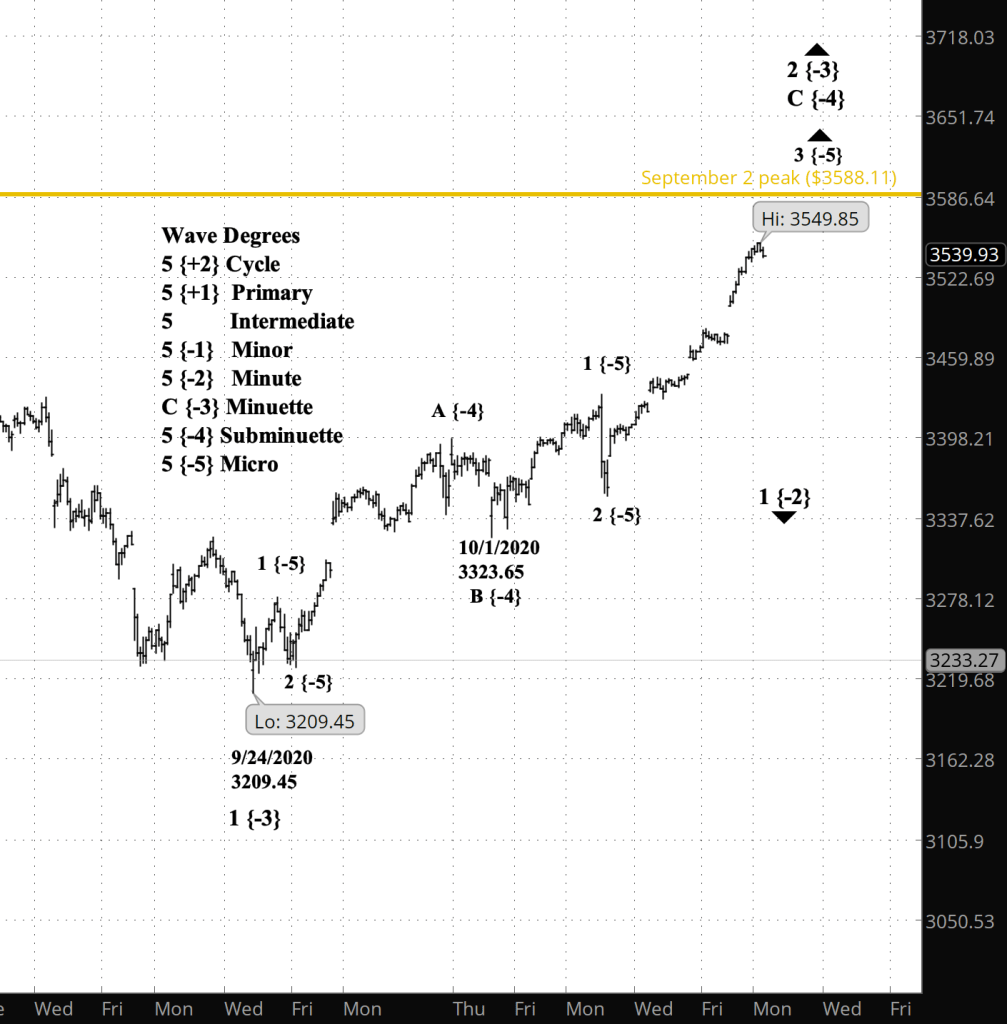
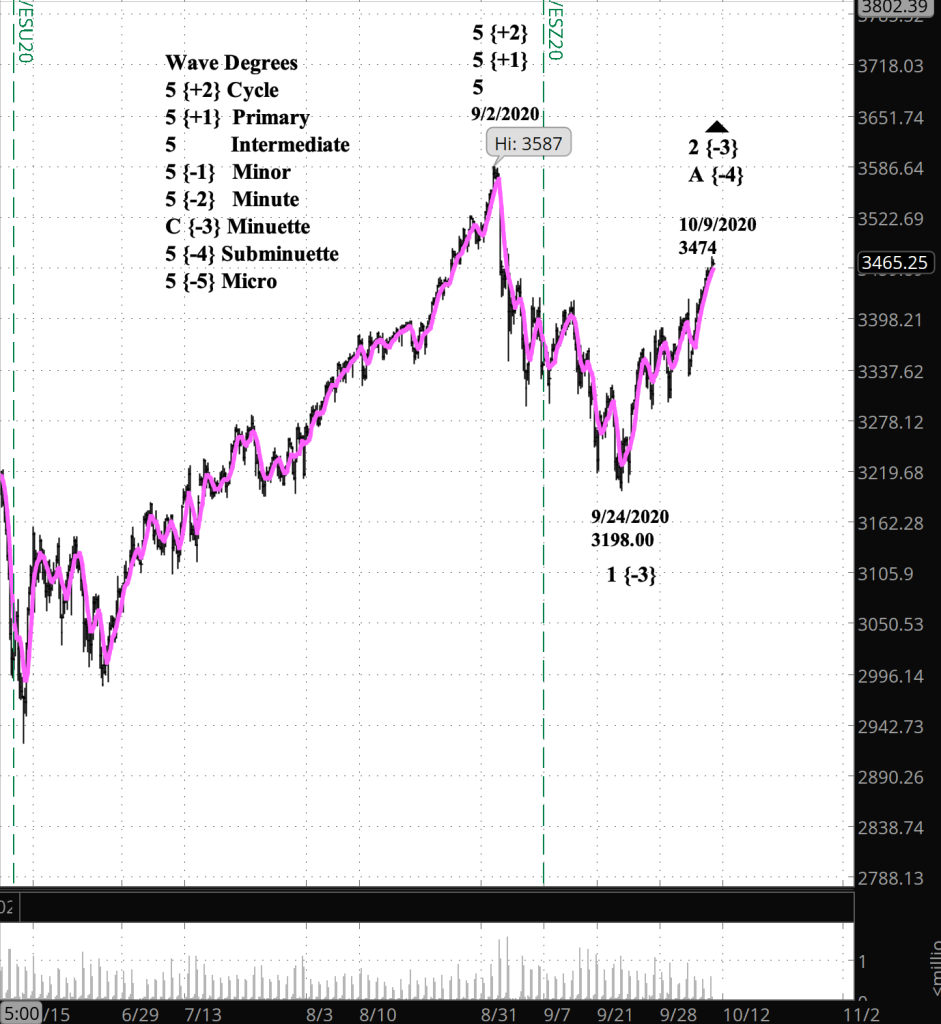
What’s happening now? The S&P 500 index continues to wind through the ambiguities I discussed in detail in yesterday’s post, climbing either as the late stage of an upward correction, or as an early stage of a resumption of the downward trend.
What does it mean? My principle count continues to favor the continuing upward correction scenario, in part because it requires three waves to the upside, and I don’t see that yet with each wave having roughly the same magnitude as its siblings. So the peak of October 12, under this scenario, counts as the end of the first movement within the upward correction.
What is the alternative? The October 12 high marks the end of the upward correction, probably, although there is a third scenario that has the correction continuing in a more complex form.
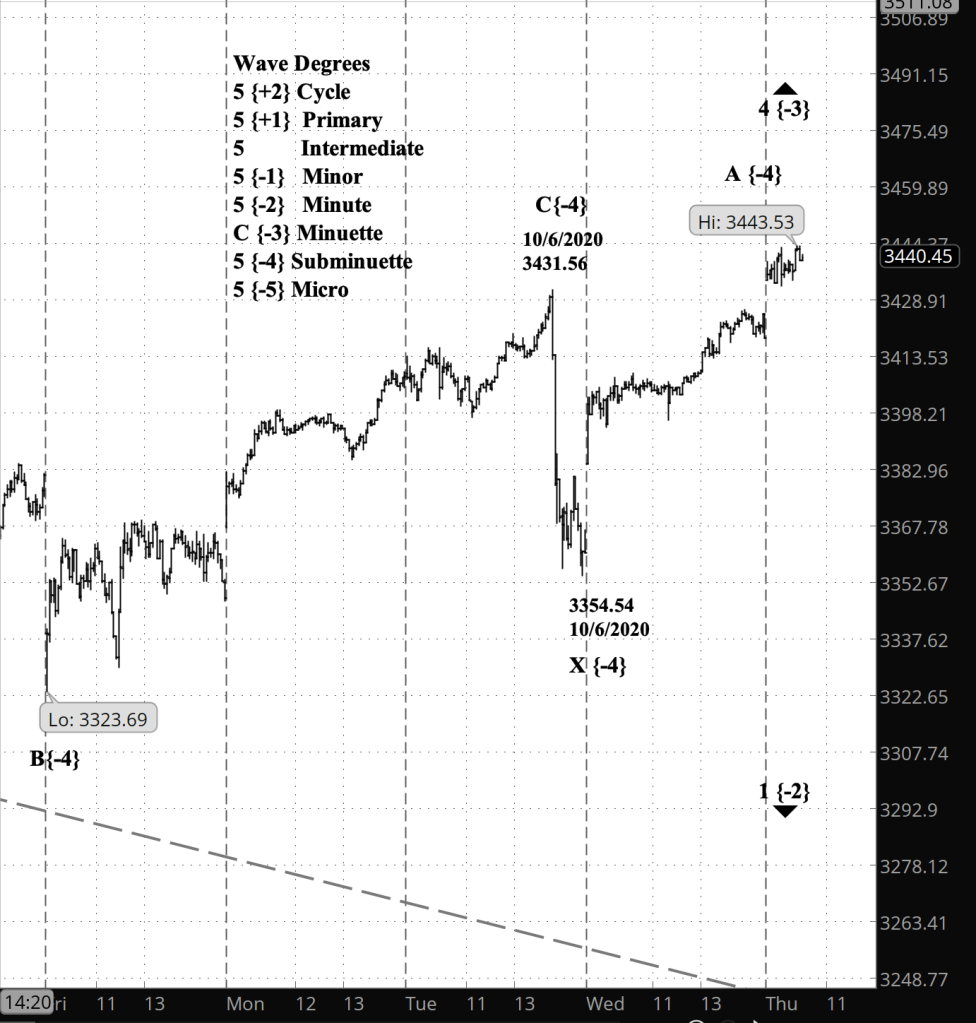
The Chart. I show two scenarios on this chart: The principle scenario in black and the first alternative — upward correction complete — in red. The price channel assumes that the October 12 high is the end of the upward correction.
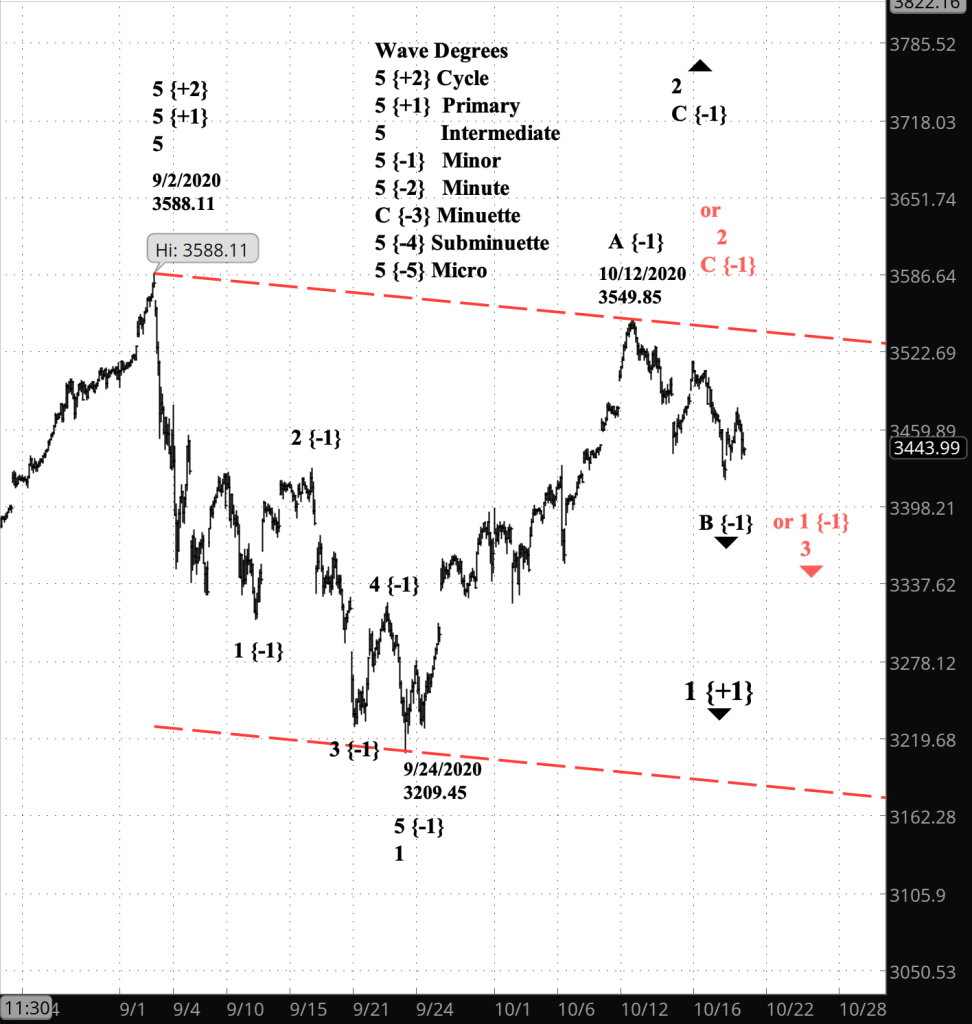
What does Elliott wave theory say? So, let’s put some waves to the various scenarios.
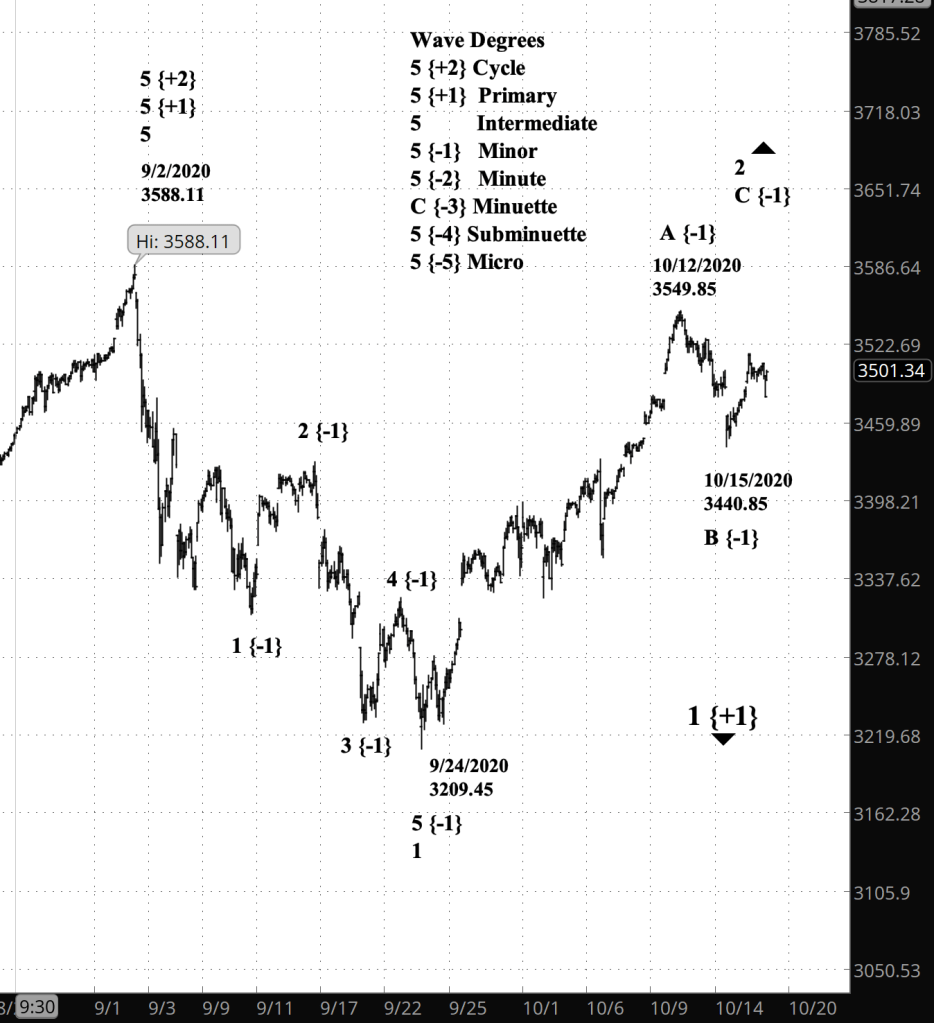
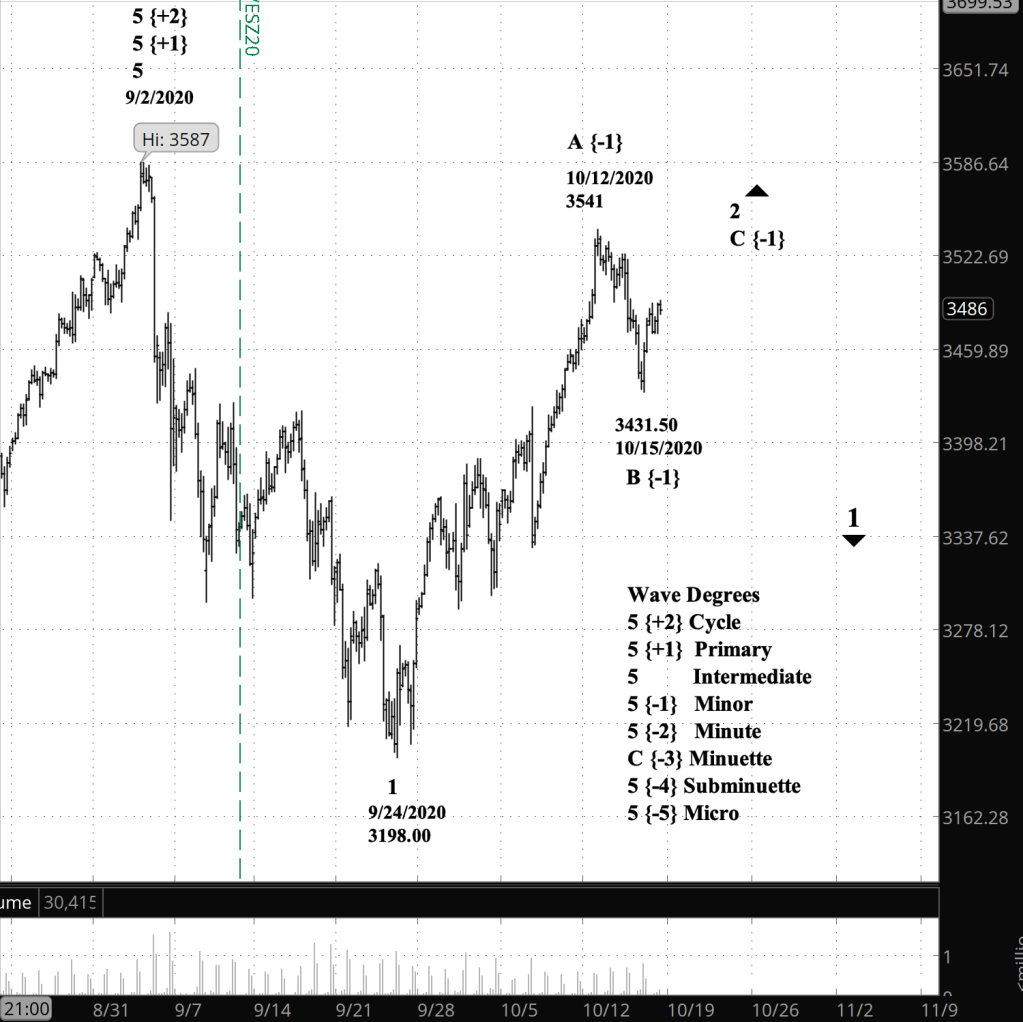
Principle: The October 12 high is the end of wave A of Minor degree within wave 2 of Intermediate degree.
Alternative: The October 12 high is the end of wave 2 of Intermediate degree, and the ensuing decline is the start of wave 3 of the same degree.
Another alternative: Same as the first alternative except the ensuing decline, rather than marking the start of Intermediate 3, is instead an X wave of Minor degree that separates the two portions of what will prove to be a compound structure within Intermediate wave 2.
My trading strategy. Happily, the two alternative scenarios work nicely with my short bear call options spreads, providing sufficient downside to allow for a profit. The principle analysis — not so much. It will probably result in a loss. In any case, having crossed the Rubicon, a trader has no choice but to march forward, adjusting strategy to match the market reality.
I shall continue to hold my shares of the inverse fund SDS, probably until Minor wave 5 within Intermediate wave 3, always keeping in mind the favorable tax treatment of long-term capital gains, on positions held for at least a year.
Read More »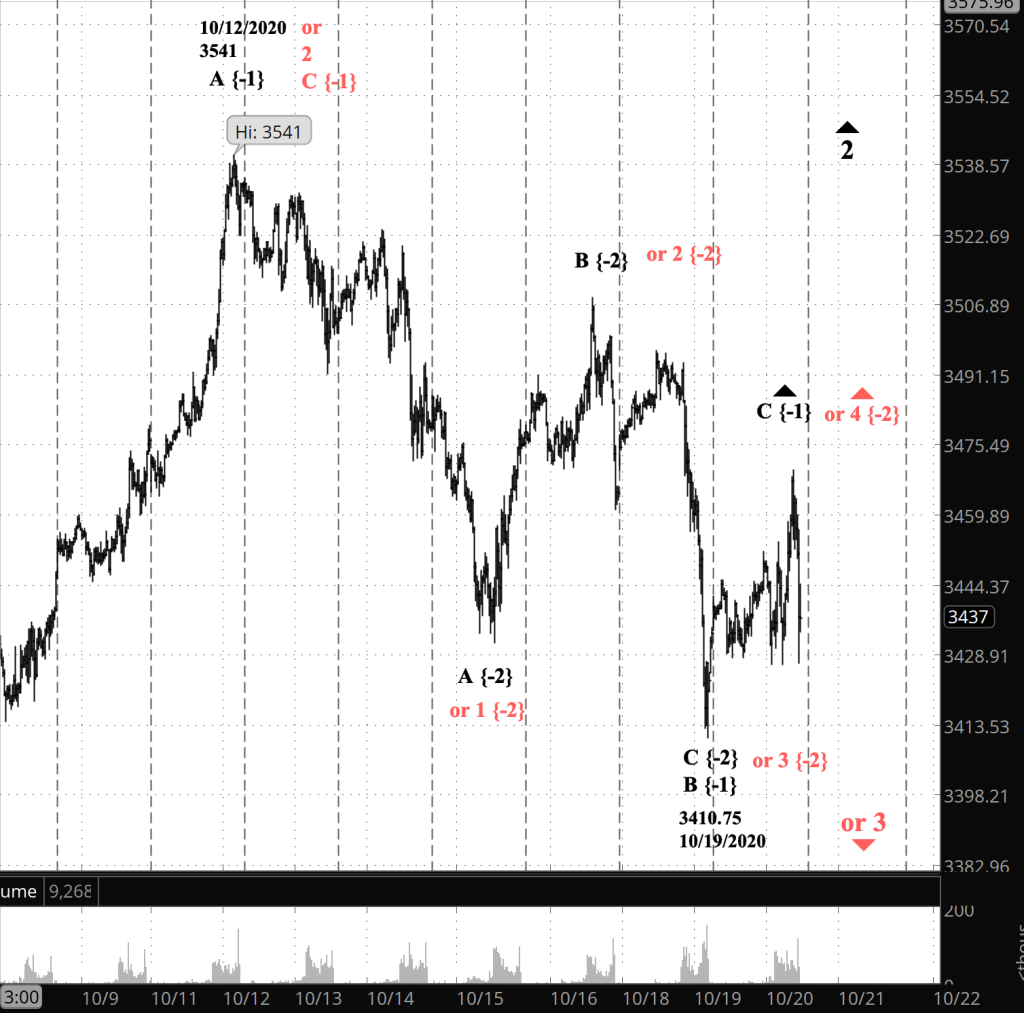
 Tim Bovee, Private Trader
You must be logged in to post a comment.